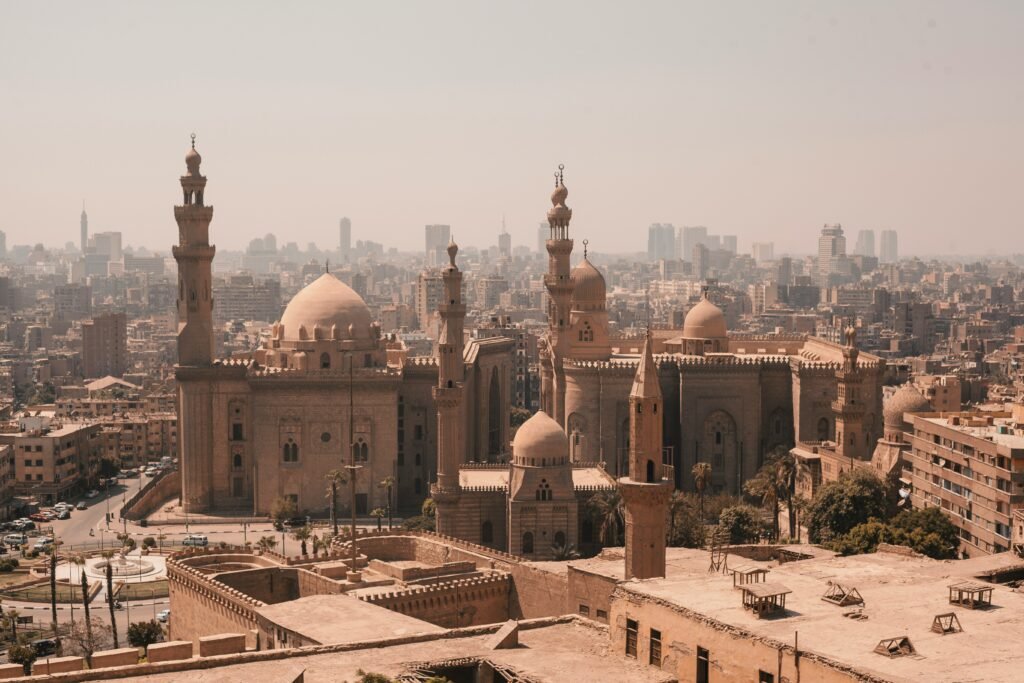


The Middle East is home to some of humanity’s most important historical and archaeological sites.
The region has been shaped by ancient civilizations, major religions, empires, trade routes, and centuries of cultural exchange.
Travelers interested in history can find extraordinary sites across many different countries.
1. Petra, Jordan
Petra is an ancient archaeological city famous for monumental structures carved into sandstone.
The site’s dramatic setting and historical importance make it one of Jordan’s most recognizable attractions.
2. Giza, Egypt
The Giza pyramid complex is among the world’s most famous archaeological destinations.
The pyramids and surrounding monuments provide an extraordinary connection to ancient Egyptian civilization.
3. Persepolis, Iran
Persepolis was a major ceremonial capital of the Achaemenid Persian Empire.
Its archaeological remains provide insight into one of the ancient world’s most significant empires.
Travelers should research current entry requirements and travel conditions before planning a visit to Iran.
4. Jerash, Jordan
Jerash contains extensive Roman-era ruins.
Columns, streets, temples, theaters, and other structures demonstrate the scale of the ancient city.
5. AlUla, Saudi Arabia
AlUla contains archaeological sites and historic landscapes surrounded by dramatic sandstone formations.
Its heritage destinations provide opportunities to learn about civilizations and trade routes that existed in the region.
6. Palmyra, Syria
Palmyra was an important ancient trading city.
Because current conditions and access can change significantly, travelers should consult authoritative travel guidance before considering any visit.
7. Baalbek, Lebanon
Baalbek is famous for monumental Roman ruins, including enormous stone structures and temple complexes.
The site demonstrates the architectural scale achieved by ancient civilizations.
8. Ephesus, Türkiye
Ephesus is an ancient city with extensive Greco-Roman remains.
Its ruins include monumental streets, theaters, libraries, and other structures.
9. Byblos, Lebanon
Byblos is one of the world’s historically significant coastal settlements.
The city contains archaeological remains and a historic center reflecting thousands of years of human settlement.
10. Old Sana’a, Yemen
Sana’a is famous for distinctive traditional architecture and a long cultural history.
However, Yemen currently presents serious security considerations for travelers, so current official travel guidance should be consulted before considering travel.
Why Historical Travel Matters
Visiting archaeological sites can provide context that books and documentaries cannot fully reproduce.
Walking through ancient streets or standing beside historic structures helps travelers understand:
- Architecture
- Trade
- Religion
- Daily life
- Political history
- Cultural exchange
Responsible Historical Tourism
Historic sites can be vulnerable to damage.
Visitors should:
- Follow site rules.
- Avoid touching fragile structures.
- Never remove artifacts.
- Use licensed guides where appropriate.
- Respect religious locations.
- Support legitimate conservation efforts.
Final Thoughts
The Middle East contains an extraordinary historical record.
From ancient Egypt and Persia to Roman cities and medieval trading centers, the region offers travelers an opportunity to explore thousands of years of human history.
Because political and security conditions can change, always verify current travel information before planning a trip.